Replication, data transparency and documentation may sound abstract and like a compulsory exercise to some, but they offer many advantages for research practice. Communicating Open Science therefore means doing more than simply explaining terms. How its practical benefits for one’s own research can still be conveyed at the end of a long conference day was demonstrated by an Open Science Happy Hour at the VHB conference.
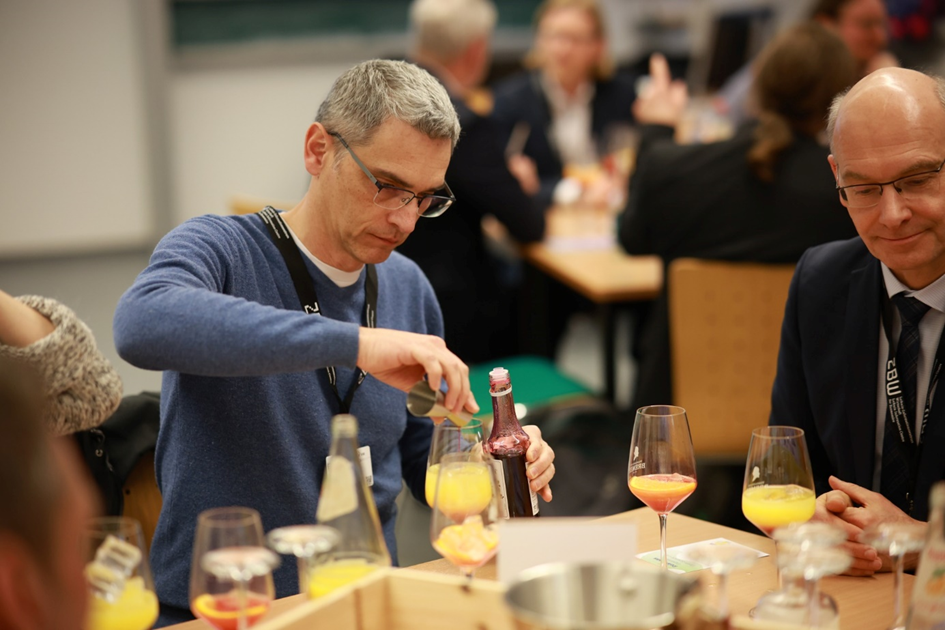
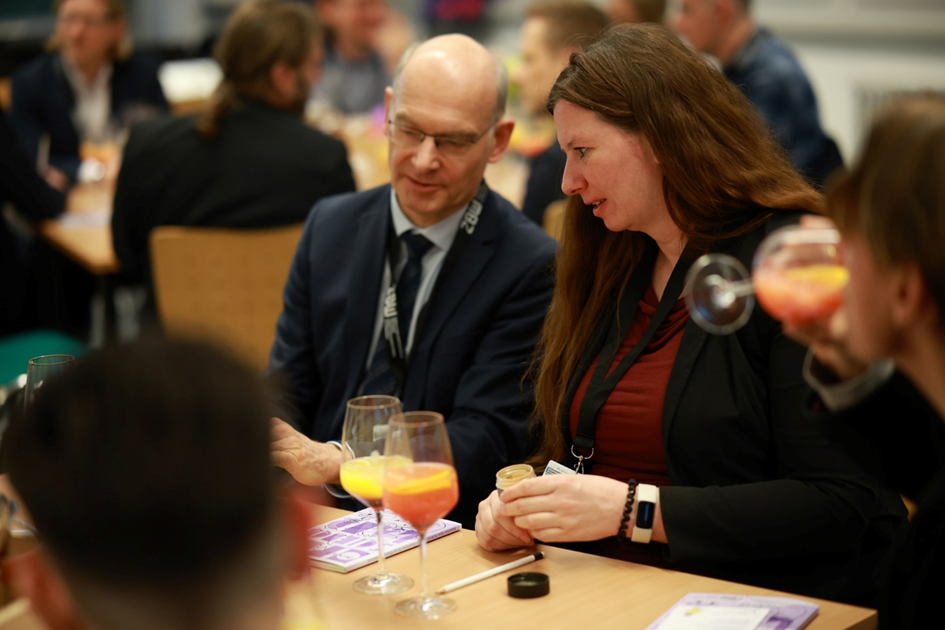
How can one talk about documentation, traceability and replicability in a way that goes beyond mere exhortation? At the VHB conference – the annual meeting of the German Academic Association for Business Research – this question was addressed on 18 March 2026 in Göttingen with a format that deliberately chose a different approach: the Open Science Happy Hour. Instead of yet another lecture, the joint initiative by ZBW and business research scholars relied on a playful, interactive method that combined information, exchange and personal experience.
Rising demands for transparency in business research
Open Science has long been more than a science policy buzzword in business administration. Requirements for data transparency, reproducibility and documentation are increasingly shaping research practice. The fact that clear documentation of the research process, transparent methodological decisions and well-structured presentation of results make knowledge production more robust – and thus contribute to good science – is not a new insight. In everyday research practice, however, what constitutes “good” documentation often remains abstract.
This is precisely where the Open Science Happy Hour format came in: using a simple but effective metaphor, it translated key ideas of Open Science into an experience that could be directly felt. In doing so, it made clear how strongly scientific traceability depends on good documentation. The format was developed by the co-authors of the guide Expedition Open Science Land (see also this blog post): Professor Dr Marko Sarstedt and Dr Susanne Adler (LMU Munich), Dr Doreen Siegfried (ZBW – Leibniz Information Centre for Economics), and Dr Meikel Neumann (Leuphana University of Lüneburg).
Replication without a complete recipe: a challenge
At the centre was a replication game with a simple basic idea: two teams were asked to recreate the same mocktail – the “Replication Sunrise”. Team 1 received an incomplete recipe, while Team 2 was given a complete set of instructions. Both groups thus had the same task, but different informational foundations.
It was precisely this difference that formed the didactic core of the exercise: anyone faced with gaps in a recipe must make assumptions, guess the order of steps and deal with uncertainty – and may ultimately arrive at a different result. Within just a few minutes, the exercise made physically tangible what often only becomes apparent in research after more prolonged engagement: whether a result can be reproduced depends not only on the willingness of those involved, but crucially on how well materials, steps and decisions are documented.
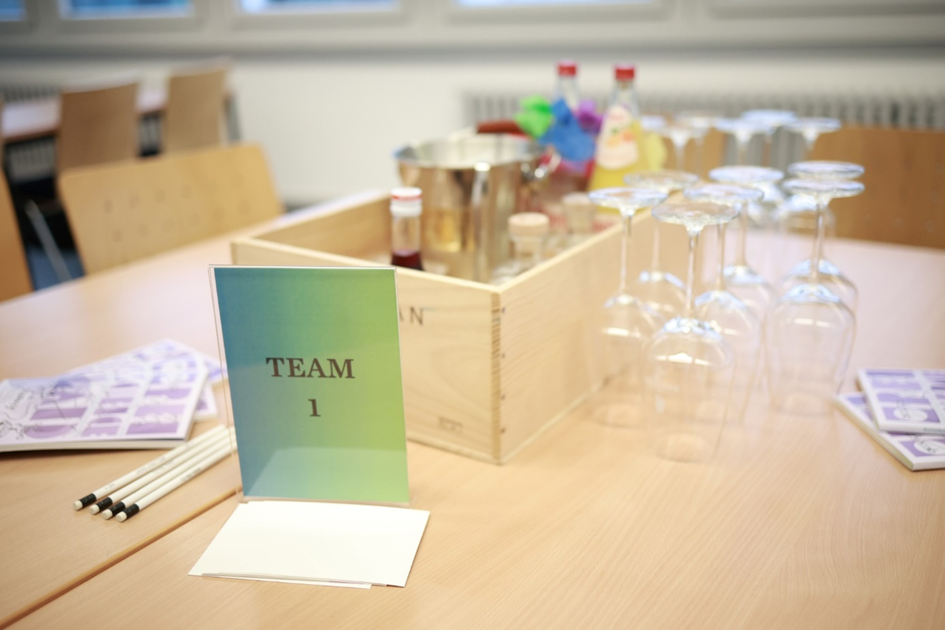
A mocktail recipe is, in its logic, not unlike a research protocol. It requires information about initial materials, quantities, the sequence and execution of steps, and sometimes also about conditions that are often implicitly assumed. If such information is missing, the result becomes open to variation, as could be directly observed at the interactive station.
From mocktail to method selection: transferring insights into research practice
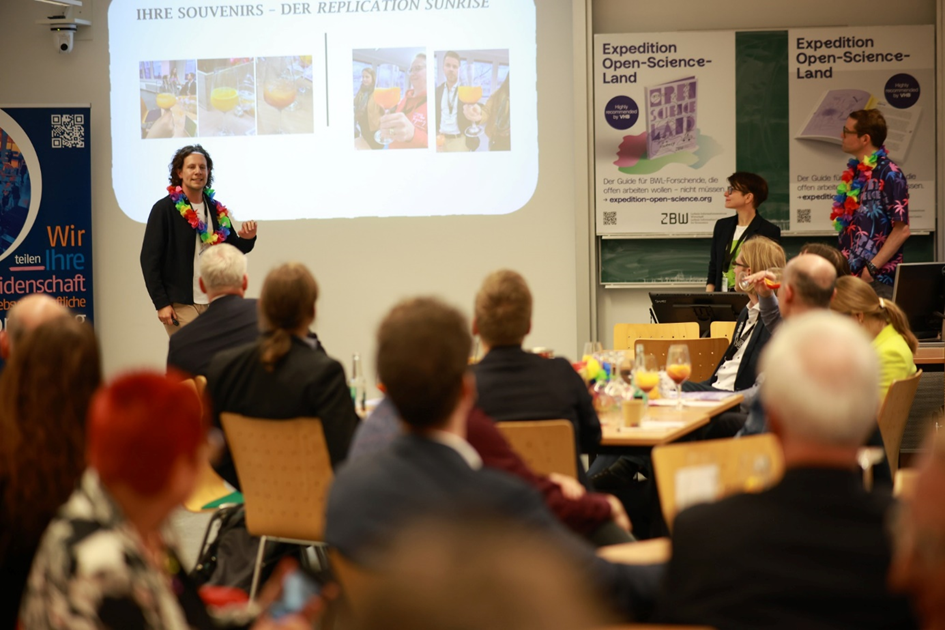
During the debriefing, the practical experience was reflected upon using three guiding questions: What was easy to implement? What was missing? How could the recipe be improved? While these questions ostensibly referred to the mocktail, they clearly targeted research processes: the requirements for good documentation, the importance of transparent decisions and the quality of instructions intended for others to follow.
Anyone who experienced first-hand during the Open Science Happy Hour the uncertainties that arise from unclear or incomplete information may, in future, reflect more consciously on their own documentation practices.
Tip: If you would like to learn more about replication, this entry in the Open Economis Guide is a good starting point.